

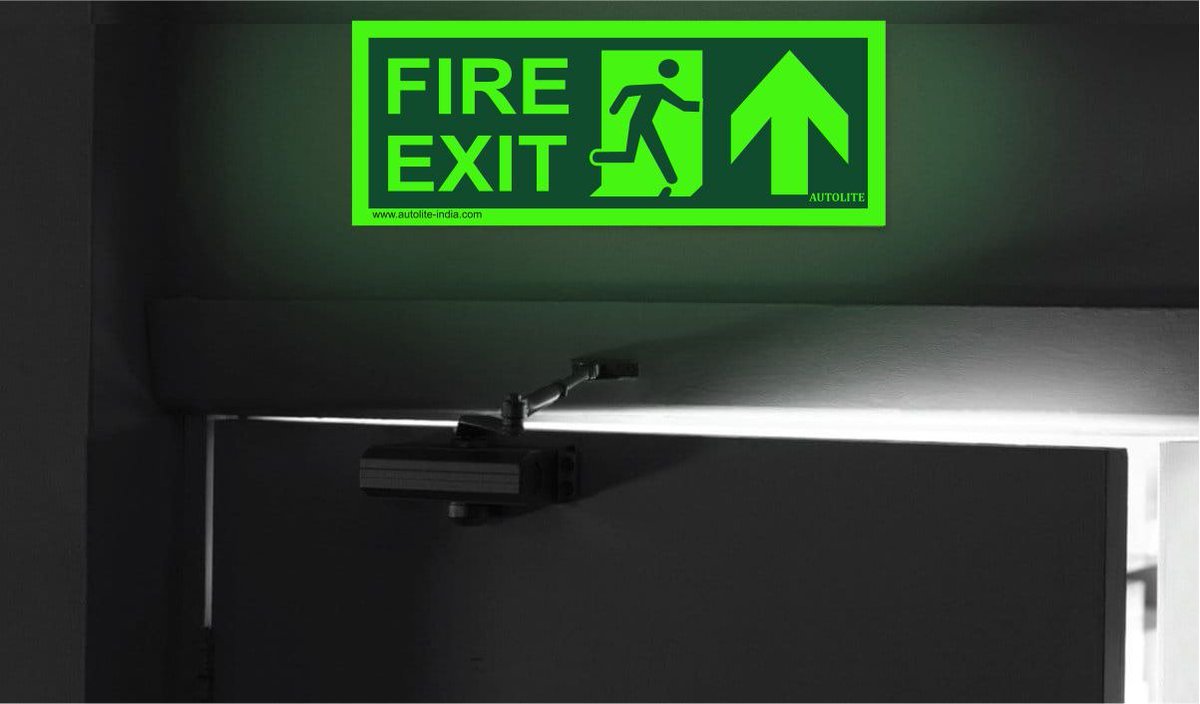
What is Emergency Escape Lighting?
There are three main aspects of emergency escape lighting:
- Escape route lighting
- Open area or anti-panic area lighting
- High risk task area lighting
- Escape route lighting enables swift and safe evacuation by illuminating routes such as corridors and stairways, along with fire-fighting equipment and safety or security equipment.
- Open area or anti-panic lighting helps people in large public buildings identify escape routes and exits when evacuation is triggered.
- High risk task lighting supports people involved in potentially dangerous processes so shut-down procedures can be implemented safely.
These distinctions emphasise the role of emergency escape lighting in fire safety and how it is adapted according to the use and occupancy levels of a particular building or area.
Where is emergency escape lighting necessary?
An emergency escape lighting system should normally cover the following:
- Each exit door
- Escape routes
- Intersection of corridors
- Outside each final exit and on external escape routes
- Emergency escape signs
- Stairways so that each flight receives adequate light
- Changes in floor level
- Windowless rooms and toilet accommodation exceeding 8m²
- Fire-fighting equipment
- Fire alarm call points
- Equipment that would need to be shut down in an emergency
- Lifts
- Areas in premises greater than 60m²
It is not necessary to provide individual luminaires for each item above, but there should be a sufficient overall level of light to allow them to be visible and usable.